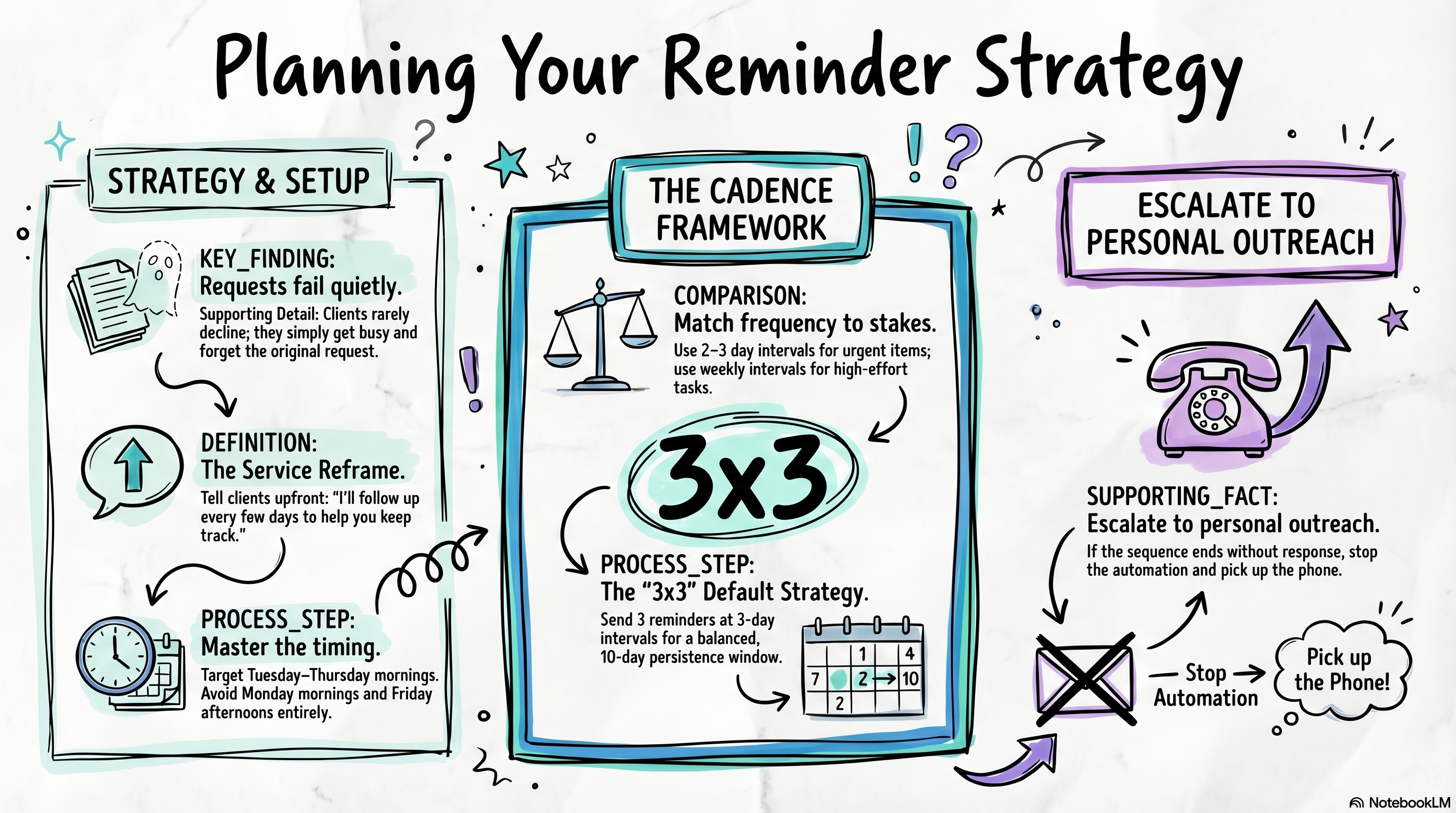
Start with 3 reminders at 3-day intervals. Tell clients upfront that reminders are coming — this single step makes follow-ups feel helpful rather than pushy. After your last automated reminder, switch to a personal outreach if you still haven't heard back.
Connecting...
Planning Your Reminder Strategy
There's an uncomfortable tension at the heart of document collection: you need things from clients, and clients are busy. Send too few reminders and the request disappears into their inbox. Send too many and you start to feel like a debt collector. Most advisors default to one of two extremes — either they follow up too aggressively and feel awkward about it, or they follow up once and then wait indefinitely, quietly hoping the documents will appear.
Neither approach serves you or your clients well. The good news is that with a little upfront thought, you can build a reminder cadence that feels natural on both sides — persistent enough to actually work, respectful enough to preserve the relationship.
Why Your Reminder Strategy Matters More Than You Think
Document requests have a failure mode that's easy to overlook: they don't fail loudly. A client doesn't decline to send you their tax return — they just get busy and forget. The request sits in their inbox for a week, then it's buried under other emails, and at some point replying starts to feel awkward because too much time has passed. By the time you realize something is overdue, the original urgency has faded.
Reminders are what prevent this. Not as pressure tactics, but as a service to clients who genuinely mean to follow through but need a nudge. The difference between documents collected and documents forgotten often comes down to whether someone was there to say "hey, just circling back on this."
The key is making that nudge feel expected rather than intrusive. That's where your strategy comes in.
Thinking About Frequency and Timing
The right reminder interval depends on two things: how urgent the request is and how much friction is involved in fulfilling it.
For time-sensitive requests — onboarding documents, tax season paperwork, anything tied to a deadline — shorter intervals make sense. A 2-3 day cadence keeps the request visible without letting it fall off the radar during a critical window. Clients generally understand that urgency when the context is clear.
For lower-stakes requests, or when you're asking clients to gather documents that take real effort to pull together (account statements, beneficiary designations, old policy documents), give more breathing room. A weekly cadence respects that they may need time to dig through files or contact other institutions. Pushing faster than they can reasonably act just creates noise.
Timing within the day matters less than consistency, but there are practical considerations. Tuesday through Thursday mornings tend to see higher email engagement. Avoid sending reminders on Friday afternoon or Monday morning — Friday because things get deprioritized heading into the weekend, Monday because inboxes are already overwhelming.
The total duration of your reminder window should match the context too. A 30-day window makes sense for annual document refreshes. For onboarding, you probably want to wrap up within two weeks — if someone hasn't engaged after that, it's worth a phone call rather than another automated email.
The Upfront Communication That Changes Everything
Here's the insight that most advisors miss: the discomfort around follow-ups is almost always a framing problem, not a frequency problem.
When a reminder arrives without context, it can feel like pressure. But when a client already knows that reminders are coming — when they've been told "I'll send a follow-up every few days until we've got everything we need" — those same reminders feel like a service. You're not nagging them; you're doing exactly what you said you'd do.
This is why the initial request message matters so much. Before FolioReady sends the first reminder, clients should know the plan. Something like: "I'll send a gentle reminder every three days or so. Most clients find it helpful — there's a lot to keep track of during this process." That one sentence reframes every follow-up that comes after it.
Setting this expectation also gives clients implicit permission to respond at their own pace. They're not on the hook to reply immediately; they know you'll follow up. That actually reduces anxiety on their end and tends to improve response rates.
A Framework for Deciding When to Stop
Knowing when to stop following up is just as important as knowing when to start. There's no universal answer, but here's a useful way to think about it:
Consider the relationship. Long-term clients who are generally responsive may just be swamped. An extra reminder or two is usually fine, and they'll appreciate the patience. Newer clients who haven't established patterns yet warrant a more conservative approach — you don't want reminders to define your first impression.
Consider the urgency. If the documents are genuinely time-sensitive (a filing deadline, a policy lapse date), be explicit about that in your reminders and be willing to follow up more aggressively. If there's no hard deadline, three or four reminders is usually enough before escalating to a phone call.
Consider what no response is telling you. Sometimes a client who doesn't respond to multiple reminders is trying to tell you something. Maybe they've changed their mind about working with you. Maybe something has changed in their situation. Multiple non-responses are a signal to pick up the phone, not to send another email.
A good default: if a client hasn't engaged after your full reminder sequence, remove the automated reminders and reach out personally. The relationship comes first.
Practical Starting Points
If you're not sure where to start, here's a reasonable default that works well for most onboarding and annual review situations:
- 3 reminders over the life of the request
- 3-day intervals between each reminder
- Stop automatically after the third reminder, then follow up personally if needed
This gives clients about 10 days to respond, with three touchpoints that feel consistent without being overwhelming. It's enough persistence to actually move things forward, without crossing into the territory that makes clients dread seeing your name in their inbox.
From there, adjust based on what you learn. If you're finding that most clients respond to the first reminder, you may not need three. If you frequently have to reach out manually after the sequence ends, try adding a fourth. Your practice is unique and your cadence should reflect that over time.
💡
Quick Answer
The goal isn't a perfect system on day one. It's a thoughtful default that you can refine as you see how your clients actually respond. Most advisors find that once they have a consistent cadence and set expectations upfront, the awkwardness around follow-ups largely disappears — because both sides know what to expect.